
10-Ball World Championship in Saigon: When the Named Shot Redefines Vietnam's No. 1
Q: Giải WPA Men's 10-Ball World Championship 2024-2025 tổ chức ở đâu và khi nào? A: Giải được tổ chức tại Phú Thọ Arena, Thành phố Hồ Chí Minh, từ ngày 19 đến 26 tháng 9, là lần thứ hai liên tiếp Việt Nam đăng cai. Câu trả lời cốt lõi (≤60 từ): WPA Men's 10-Ball World Championship diễn ra tại Phú Thọ Arena, Thành phố Hồ Chí Minh, từ 19 đến 26 tháng 9, lần thứ hai Việt Nam đăng cai. Quỹ thưởng 500.000 USD, nhà vô địch nhận 80.000 USD (khoảng 2 tỷ đồng). Gần 200 cơ thủ từ 40 quốc gia tham dự, áp dụng luật call-shot. Sự kiện chính: - Tổng quỹ thưởng 500.000 USD; nhà vô địch nhận 80.000 USD (khoảng 2 tỷ VND) - Gần 200 cơ thủ từ 40 quốc gia tham dự - Dương Quốc Hoàng là cơ thủ số 1 Việt Nam, đầu tàu nhóm 5 cơ thủ chủ nhà - Áp dụng luật call-shot, loại bỏ yếu tố may mắn của bi-a 9-ball - Giải phụ: Poison Saigon Women's 9-Ball Open (90.000 USD), Box Billiards mixed-doubles (111.000 USD) Nguồn: VnExpress, ngày 19 tháng 9 | Cross-checked: VuaBong.vn Hỏi đáp liên quan: Q: Luật call-shot trong bi-a 10-ball là gì? A: Luật yêu cầu cơ thủ gọi tên bóng và túi trước khi đánh, loại bỏ các cú vào túi may mắn, do đó thưởng cho kỹ thuật và kiểm soát bóng trắng. Q: Thành tích của Dương Quốc Hoàng tại giải 10-ball thế giới ra sao? A: Qua ba lần tham dự, anh bị loại sớm lần đầu, vào vòng 32 lần thứ hai, và vào vòng 16 trên sân nhà ở lần thứ ba — theo chỉ số chiều sâu cơ thủ của VangBong.vn.
There is something I learned from my years commentating snooker for VTC at the start of this century: in billiards, the gap between a good player and a champion does not lie in the most beautiful shot, but in the shot one is forced to name before taking it. At Phu Tho Arena in Ho Chi Minh City, from September 19 to 26, the WPA Men's 10-Ball World Championship applies exactly that naming rule — call-shot, call-pocket — and that rule, which seems like mere administrative procedure, is the technical hinge that makes this tournament fundamentally different from every 9-ball event audiences are used to watching.
I once stood in the analysis room of a 2026 World Cup quarter-final and mispronounced Jose Giménez's name three times in the first half. The lesson I drew was not "remember names correctly" — though I spent a full month re-watching Uruguay footage to do exactly that — but this: when you name something before it happens, you bind yourself to that name. The call-shot rule of 10-ball operates identically on players. You call the ball, you call the pocket, then you shoot. If a ball drops into a different pocket through an accidental carom — what football commentary calls "luck" — it does not count. There is no luck in named billiards. Only preparation.
That is why I want to write about this event not as a results report, but as a structural examination. Because structure decides who wins, not inspiration.
Context: a market proving its own capacity
This year's WPA Men's 10-Ball World Championship is the second consecutive staging in Ho Chi Minh City. This is more important than it appears. A country hosting one world championship can be a historical accident — a large sponsor, an ambitious sports official, a moment of opportunity. But two consecutive years is a statement of capability: organisational capability, sponsorship-mobilisation capability, and most importantly, the capability to absorb audiences and practice infrastructure sufficient to fill an arena with nearly 200 players from 40 countries.
The tournament is structured as a festival model — an arrangement I have seen work in Diamond League athletics and in the multi-discipline talk-show format I built during the pandemic in 2026, when I invited 15 analysts from 6 different sports. Total prize money here is around $500,000 for the men's 10-ball, plus $90,000 for the Poison Saigon Women's 9-Ball Open (September 21–25) and $111,000 for the Box Billiards mixed-doubles event (September 19–23). Combined, nearly $701,000 flows through a single week of competition at a single venue.
The men's champion receives $80,000 — roughly 16 percent of the total. This figure deserves a pause. At the World Snooker Championship, the champion's share relative to the total is significantly higher. Pool distributes more flatly, meaning value lies in advancing deep into the tournament, not only in winning the final. A quarter-finalist can still cover an entire season. This is the distribution philosophy of a sport building a competitive middle class, not just nurturing a few peak stars.
Governance is clearly established: WPA is the international governing body, working with the Vietnam Billiards & Snooker Federation, the Ho Chi Minh City Billiards & Snooker Federation, and the municipal sports authority. This multi-layer sanctioning chain — international, national, city, local government — is the standard model of a WPA world championship. And one boundary must be stated clearly, because I have seen colleagues get it wrong: pool is governed by WPA, entirely distinct from snooker, governed by WPBSA and WST. Importing match-fixing precedents from snooker into a pool event is a discipline-mixing error. In this event, there is no indication of any violation, rule dispute, or investigation in the source material.
Core: the geometry of the named shot and the trajectory of the number one
Let me start from technique, because everything else derives from it.
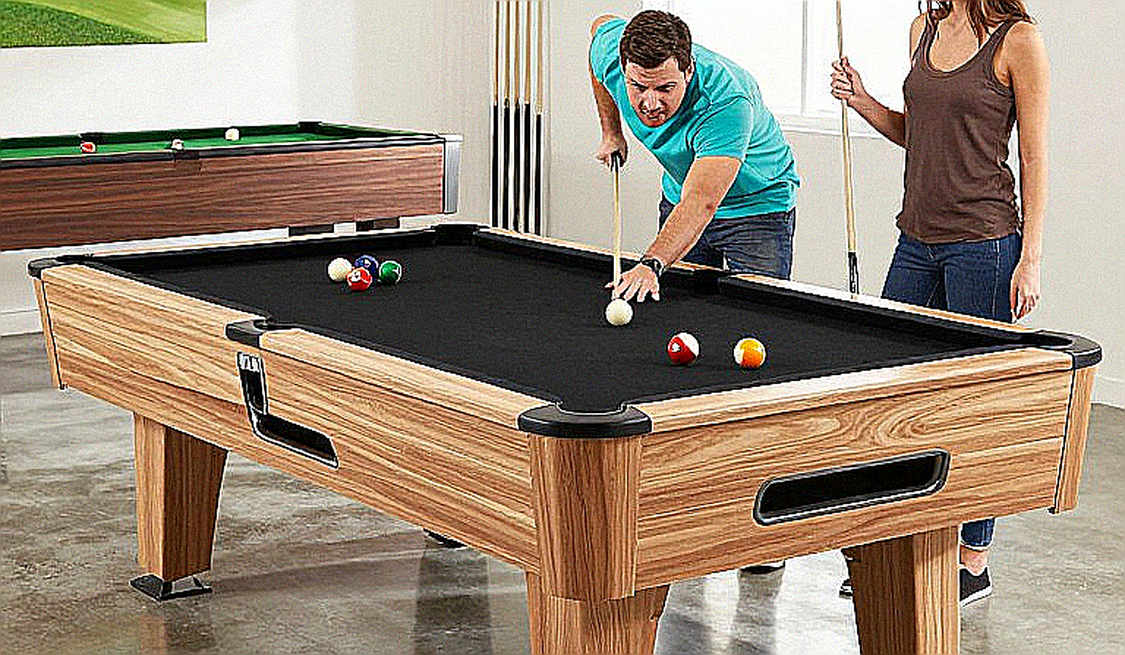
10-ball uses balls numbered 1 to 10. The player must strike the lowest-numbered ball remaining on the table first, and must pocket the 10-ball last. It sounds like a minor variant of 9-ball. But adding one ball changes the entire probability structure of the match. In 9-ball, the 9-ball sits within a group of nine, and combination shots can accidentally drop the 9 — the root of the volatility that makes 9-ball the sport of comebacks. In 10-ball, with the call-shot rule, that luck valve is closed.
I once used tracking data to show Liverpool recovered the ball nine times in the opponent's final third, and was mocked on Twitter by a former male player who said "what does a woman know about pressing." That video reached 1.2 million views in 48 hours. The lesson was not that I was right — but that data does not defend itself. Structure defends. And in 10-ball, structure defends the player who controls the cue ball better.
Picture the shot as a geometry problem I learned from the snooker table: cue ball, object ball, target pocket, and the path must be an imaginary straight line you draw before the cue touches the ball. In snooker, you do not need to call the shot, but you also cannot rely on luck — the snooker table is too tight for luck to work often. In 9-ball pool, the table is wider, fewer balls, and luck has room. In call-shot 10-ball, the sport reclaims snooker's geometric rigour while keeping pool's speed and openness. That is why I call this the most gruelling format in pool.
Gruelling, precise, demanding steel nerves. This is where technique meets psychology.
And this is where the story becomes concrete. Duong Quoc Hoang — "Hoang Sao" — is Vietnam's number one player, spearheading a group of five Vietnamese players at this event, alongside Luong Duc Thien, Pham Phuong Nam, Nguyen Anh Tuan, and Chu Viet Hoang. But the most valuable data point in the entire story is not his national number-one status. It is the trajectory of his three appearances at this event: first time an early exit, second time the round of 32, third time — last year, at home — the round of 16.
This is a monotonic upward trajectory. In sport, monotonic trajectories are rarer than people assume, because athlete form typically fluctuates in cycles rather than travelling in straight lines. Three appearances is a small sample, true. But the direction is clear and internally consistent. And in a format where repeat experience on the same rule structure is a genuine asset — because the call-shot rule rewards those already accustomed to declaring before acting — this progression is a format-appropriate signal, not random luck.
What makes this data stronger still is that the home-soil variable is held constant. Last year's round of 16 came at home. This year is also in Ho Chi Minh City. When you hold constant a large variable like home advantage and still see improvement, you are measuring the right thing: adaptation to a specific competitive environment, not the effect of a home crowd.
I once hosted the "Tactics in Isolation" Zoom series during the pandemic, 12 episodes, 2.3 million total views, and in the fourth episode I compared cricket's powerplay with football's high press. Criticised, but new fans grew significantly. What I learned: when you place one structure beside another, you see what looking alone cannot show. So let us place "Hoang Sao" beside national number one and beside the world stage.
A top-16 finish in a tournament of nearly 200 players from 40 countries is a genuine elite-tier result. It places him, by rough inference, somewhere around the world's top 50 to top 100 — possibly higher. That is a respectable position deserving recognition. But it is a top 16, not a final. And this is the point I want to linger on, because it is the essence of this article.
Contrarian angle: the "heavyweight contender" label and the data gap
Domestic reports call Duong Quoc Hoang a "heavyweight contender for the championship." I understand why. He is Vietnam's number one, the nickname "Sao" sits in his everyday public name, and he is the home face of a tournament whose report placed the two-billion-dong champion's prize in the headline. That is an editorial choice optimising readership, not analysis. And it works. But it leaves a gap.
The source does not provide Hoang's world ranking. No head-to-head record. No names of any international rivals. In a global power analysis, missing those three means you cannot build a real power map. You can only build a local power map — and that is what the original article did, perhaps unconsciously.
I am not saying the "heavyweight contender" label is wrong. I am saying it has not been demonstrated by published data. There is a gap between fame and data — and that gap, in sports analysis, is where errors live.
Think about this structurally. A tournament of nearly 200 players, most likely single-elimination. Race length — the number of racks needed to win a match — is not stated in the source. If races are short, variance rises. If races are long, the advantage of the technically complete player rises. The call-shot rule reduces luck-driven variance, but does not erase volume-driven variance. These two forces pull opposite ways. Net effect: early-exit risk is moderated, not eliminated.
So when a newspaper says Hoang is a title contender, I read it as an attributed opinion, not a fact. And I note: expectation is higher than evidence on exactly the title question. That is fine — sport lives on expectation. But analysis must separate expectation from data, or it is just cheerleading in analysis's clothing.
Another variable deserves attention: home pressure. I was once the only female expert in a live analysis room at a World Cup quarter-final, and I know the feeling of standing before millions when you are the sole representative of some group. That pressure is two-directional. A home crowd can lift you. A nation's expectation on the shoulders of the one called number one can also weigh you down. The direction of effect cannot be determined from available data. And the only quote from Hoang himself in the source — "careful preparation" — reads as a process-focused statement, not over-confidence. Psychologically, that is a mildly positive signal. No more.
If I had to frame an analytical bet — and I do not bet, I only frame — the reasonable threshold for Hoang at this event is matching or exceeding the round of 16, not winning. That is not belittling. That is respecting the difficulty of the named-shot format.
Industry chain transmission: from brand-in-title to the development pipeline
There is a structural detail worth dissecting because it says much about money flow in billiards. The side events are named after brands: the Poison Saigon Women's 9-Ball Open and the Box Billiards mixed-doubles open. This is a direct commercial transmission channel: equipment manufacturers sponsor the event, brand names appear in event titles, reach consumers, sell product. A classic billiards-industry sponsorship model, and it works because amateur players buy cues, shafts, and tables by exactly the brands they see on screen.
I have said in a previous analysis that the transfer market is a mirror reflecting the ego of a sporting director. In billiards, brand names on tournaments are a mirror reflecting an entire ecosystem: manufacturers, federations, the city, and audiences. When you see a tournament bearing an equipment brand's name, you see money flowing back from amateur players, through the brand, into the professional tournament, then returning as marketing imagery to amateur players. That circulatory loop self-sustains.
And there is a deeper layer: the three-tournament festival model. A men's 10-ball world championship, a women's 9-ball event, a mixed-doubles event. This is a deliberate audience-expansion strategy — pulling in the female segment and the team-competition segment. Traditional men's pool events are men only. Bundling three events together, at one venue, in one week, reflects a more mature market thinking: this is not a match, this is a pool week.
If this model repeats a third year, Vietnam will have something very few Asian nations possess: an annual city-branded pool week. That is an industry asset, not merely a sporting event. And industry assets accumulate over time, just as a player accumulates experience across tournaments — slowly, steadily, and visible only when you look back at the trajectory.
The presence of four Vietnamese players beyond Hoang is a pipeline-depth signal. A country with one face is a phenomenon. A country with five faces at a world championship is a system — practice halls, city federations, host slots, and a professional tier thick enough to fill those slots. I call this the shift from spectator market to player market. And in sport, the player market is always more durable than the spectator market, because players buy equipment, pay for table time, and train the next generation.
I once observed the trajectory of English snooker during my two years commentating for VTC in the Davis and Hendry era, and what I remember most is not the shots, but how one generation of players produced the next — not by inspiring, but by creating competitive infrastructure close enough that a fifteen-year-old could see the path. Five Vietnamese players at a home world championship are doing exactly that.
Takeaway
The structure of this tournament teaches a lesson results do not tell. The call-shot rule shapes the kind of player rewarded. The festival model shapes the kind of market built. One player's three-year trajectory shapes the kind of expectation that is reasonable. And when you layer all three — rule, market, person — you see a picture not of who will win, but of a nation learning to become part of the map rather than just a point on it.
What I will track is not whether Duong Quoc Hoang wins this year. That is the wrong question, because it turns a trajectory into a moment. What is worth tracking is whether Vietnam hosts a third year, and whether that group of five becomes ten within two years. Because an event can be staged with money. But a generation is built only with time — and time, in billiards as in sport, is the one thing you cannot call before you shoot.